

You Saw One Cockroach. What Are You Not Seeing Behind the Wall?
 twiceblessedbloggers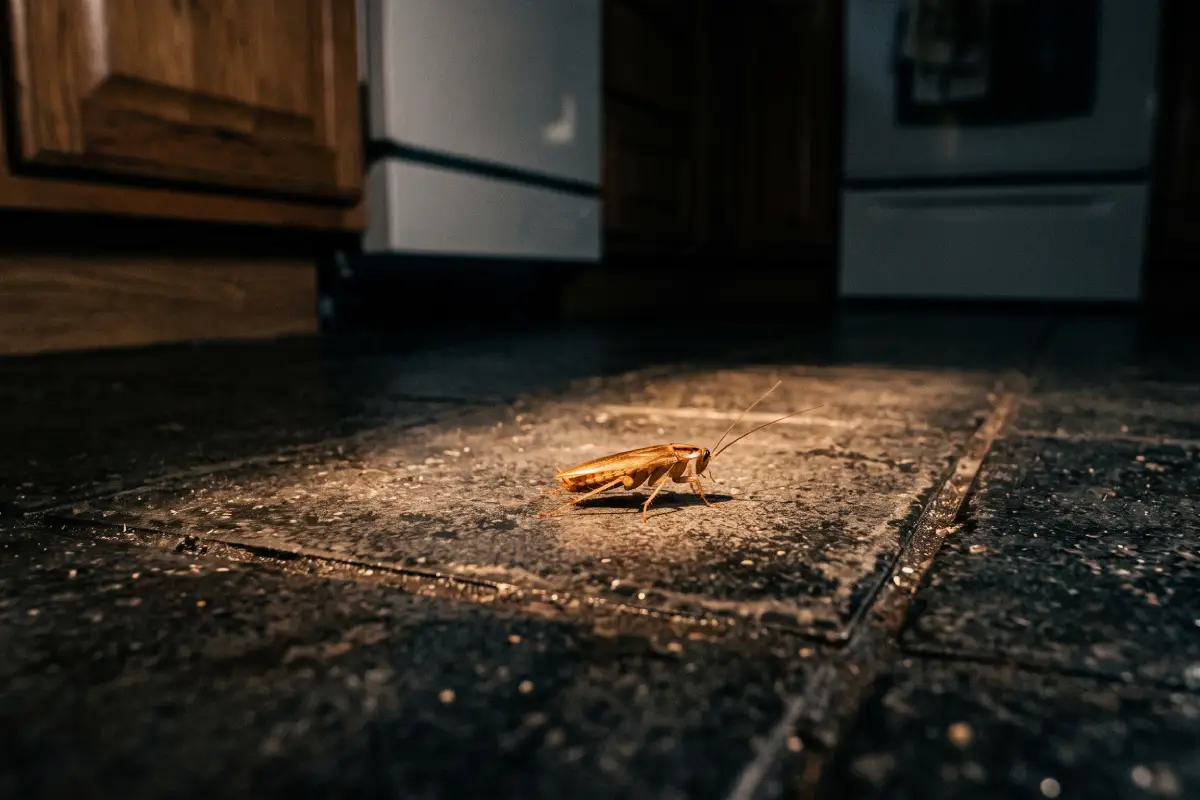
Quick answer: One cockroach is a signal, not a verdict. Because roaches hide by day, a sighting usually means more are nesting out of view. How worried you should be depends on two clues: a small tan roach indoors, or any roach seen in daylight, points to a breeding German cockroach population. A single large roach near a drain at night is more likely a one-off intruder.
A single German cockroach egg case holds up to 40 eggs, and the female carries it hidden on her body until two days before those eggs hatch. So the one roach you spotted on the kitchen bench is almost never the whole story.
This guide helps you read that single sighting: what the species and timing reveal, what to look for that you cannot see, and what to do next. The stakes are practical, since cockroaches contaminate food surfaces and their droppings and shed skin trigger asthma, especially in children.
Should you worry? A 10-second self-check
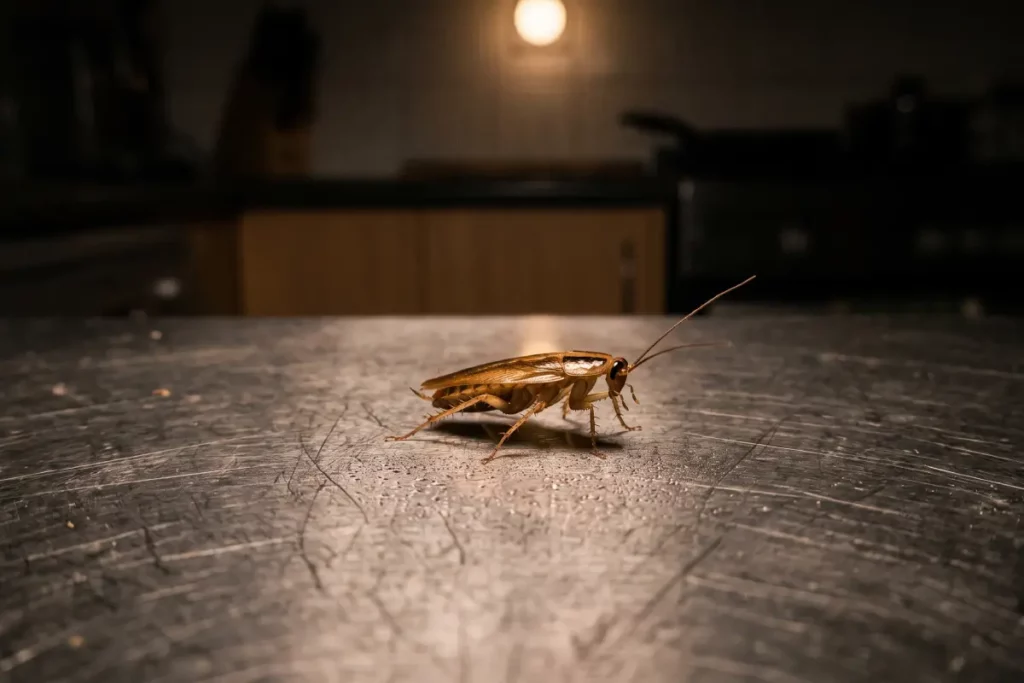
Match your sighting to the row below before you do anything else.
| What you saw | Where and when | What it likely means |
| Small, tan, two dark stripes | Indoors, near food, any time | German cockroach, likely breeding inside. High concern. |
| Any cockroach | Out in the open during daylight | Overcrowded hidden population. High concern. |
| Large, reddish-brown | Near a drain or at night | Possible intruder from plumbing or garden. Investigate. |
| Large, brown, pale side stripes | Near a door, subfloor, or garden | Australian cockroach, usually an outdoor wanderer. Lower concern. |
Key takeaway: Species plus timing tells you almost everything. Small-and-indoors or any-roach-in-daylight are the two signals that point to a real infestation rather than a stray.
Why one cockroach is rarely the whole story
A visible roach means the hidden population has grown enough to push individuals into the open. Cockroaches are nocturnal. They spend daylight hours pressed into thin cracks near warmth, food, and water, and they emerge at night to feed.
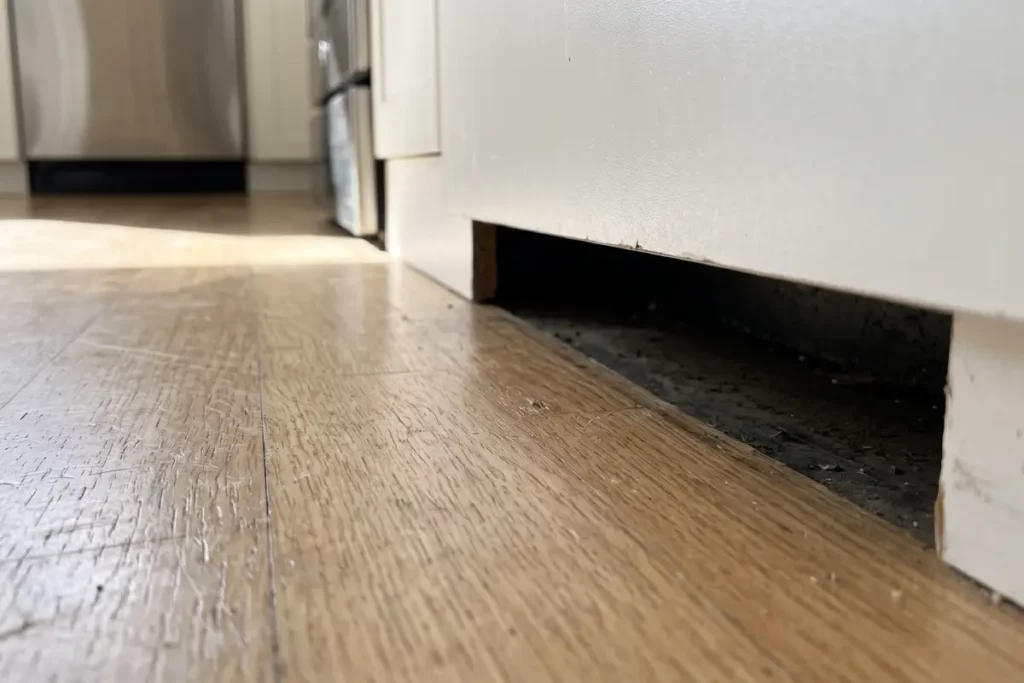
A German cockroach nymph fits into a gap narrower than 2 mm, which is why they nest inside appliance motors, under sinks, and behind kickboards where you never look. Pest controllers work off a rough rule of thumb that for every roach you see, several more sit out of sight. Treat that as an industry heuristic rather than a measured ratio, but the direction it points is correct.
The one exception is a lone insect wandering in from outside, which happens more with larger outdoor species.
Key takeaway: Roaches hide by instinct, so seeing one in the open signals pressure on the hidden nest, not a lone visitor.
What the timing of your sighting tells you
When you saw the roach matters as much as the fact that you saw one.
Daytime sightings
Seeing a cockroach in daylight is the stronger warning sign. Because they prefer darkness, roaches out during the day often mean the sheltered spaces are overcrowded, forcing some into the open to find food. Repeated daytime sightings point to an established indoor population.
Night-time sightings
Spotting one at night is less alarming on its own, since that is when they naturally forage. It still deserves attention. A single confirmed night sighting inside, backed up by droppings or an egg case, means you have residents and not visitors.
Key takeaway: Daytime equals overcrowding. Night-time is normal behaviour and needs supporting evidence before you judge severity.
The species changes everything
Identifying the species tells you whether you have a breeding indoor colony or an occasional outdoor visitor. Three cockroaches turn up most in Australian homes, and they behave very differently.
The German cockroach lives almost entirely indoors and drives most serious kitchen infestations. The American cockroach favours drains, subfloors, and sewers. The Australian cockroach spends most of its life outdoors and only sometimes comes inside.
| Species | Typical size | Where it lives | Eggs per case | Control difficulty |
| German | 12 to 15 mm, tan with two dark stripes | Indoors: kitchens, bathrooms, appliances | 30 to 40 | Very hard |
| American | Up to 40 mm, reddish-brown | Drains, subfloors, sewers, warm voids | 14 to 16 | Moderate |
| Australian | 30 to 35 mm, brown with pale side stripes | Mostly outdoors: gardens, woodpiles, subfloor | Around 20 to 24 | Moderate |
If the insect was small, tan, and indoors near food, treat it as a German cockroach until proven otherwise. That is the outcome you least want, because German cockroaches breed inside your walls and resist casual treatment. A single large reddish-brown roach near a drain is more likely an intruder from the plumbing or garden.
Key takeaway: Small and tan indoors is the worst case. Large and reddish-brown near a drain is often just a wanderer.
The real problem is what you cannot see
The visible roach is a symptom. The problem lives in three things you have to go looking for.
Egg cases
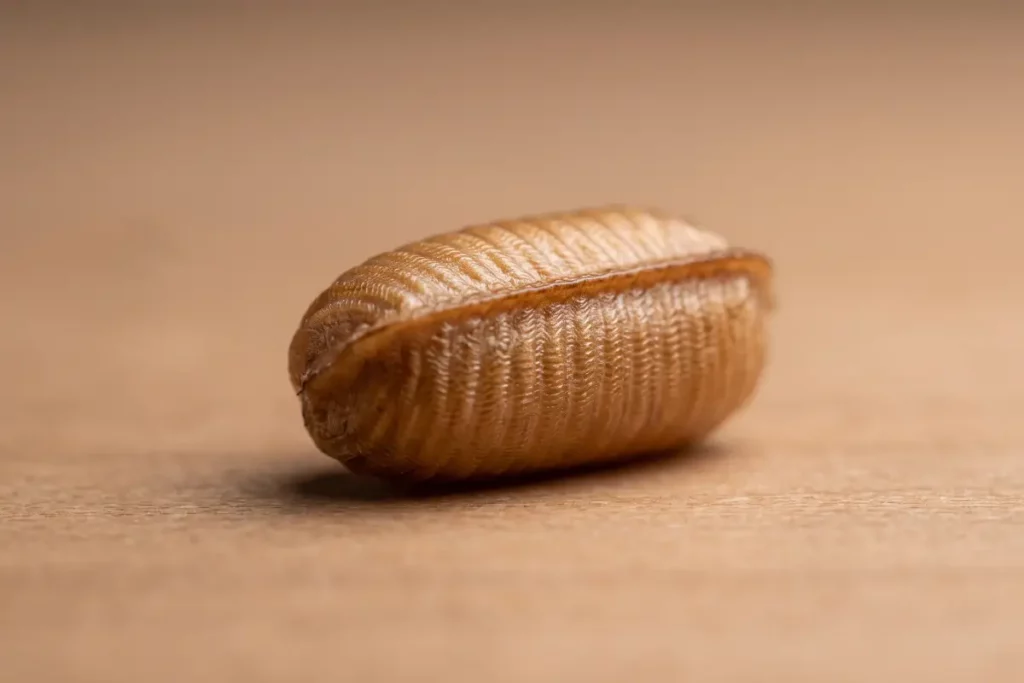
German cockroaches carry their egg case, called an ootheca, attached to the body until roughly two days before hatching, then tuck it into a deep crack. Each case is a small, ridged, light-brown capsule about the size of a grain of rice. Finding one means the roaches are not passing through. They are breeding.
Droppings and smear marks
Small species leave droppings that look like coarse ground pepper or coffee. Larger species leave blunt-ended cylindrical pellets. Some species also smear a pheromone-laced residue that marks feeding spots, so droppings cluster in the same hidden corners. Check cupboard edges, under the sink, and behind the fridge.
The health cost
Cockroach faeces, saliva, and shed skin contain proteins that trigger asthma and allergic reactions, particularly in children. They also carry bacteria from drains and rubbish onto food surfaces. Australia’s Better Health Channel notes that ingested bacteria can survive in a cockroach’s gut for months and pass in its droppings onto the food you eat.
Key takeaway: Egg cases and clustered droppings confirm breeding. The health risk is real: allergens that affect children’s asthma and bacteria on food surfaces.
How fast a hidden population grows
Speed is what turns one sighting into a kitchen full of roaches within weeks. A female German cockroach produces four to eight egg cases across her life, each holding up to about 40 eggs, and nymphs can reach breeding age in roughly two months in warm conditions.
Once daughters start breeding, the numbers compound. Entomology estimates put the theoretical output of one founding female and her descendants in the tens of thousands over a year under ideal warmth and food, though real households never reach the lab maximum because of predation and limited resources.
Australia’s climate helps the roaches. These insects are cold-blooded and thrive in warm, humid conditions, which is why buildings in the northern parts of the country are especially prone to infestation.
This is why many pest professionals recommend spring pest treatments, timed to catch cockroach numbers while they are still low rather than waiting until a colony is entrenched.
Key takeaway: German cockroaches breed fast enough that a small autumn problem can become a summer infestation. Acting early beats reacting late.
What to actually do next
Confirm first, then decide whether it is a job for you or a licensed operator. Work through the checks below in order.
- Inspect the warm, moist, hidden spots. Look behind and under the fridge, inside the dishwasher door seal, under the sink, and along cupboard edges for droppings, egg cases, shed skins, or a musty odour.
- Cut off the water. Dry out sinks and shower bases at night, since cockroaches need a daily water source.
- Cut off food. Clear bench scraps and pet bowls overnight, and store dry food in sealed containers.
- Close harbourage. Seal gaps around pipes and skirting where roaches shelter.
- Bait, do not blast. Gel baits placed at harbourage points outperform broadcast sprays, which scatter roaches and rarely reach the nest.
- Escalate if needed. A confirmed German cockroach problem, egg cases in multiple spots, or sightings that continue after baiting all warrant a licensed pest control operator. Melbourne households in this position typically call a specialist such as Pest Exterminator Melbourne, who can identify the species and treat the nest directly rather than the surface symptoms.
Key takeaway: Remove water and food, bait at the source, and hand German cockroaches or recurring sightings to a licensed operator rather than another can of spray.
The bottom line
One cockroach is a signal, not a verdict. It is rarely a lone traveller, because these insects hide by day and only appear in the open once shelter gets crowded, so a sighting usually points to more you have not found yet.
How worried you should be depends on two things you can check yourself. A small tan roach indoors, or any roach seen in daylight, leans toward an established German cockroach population breeding in cracks and appliances. A single large reddish-brown roach near a drain at night is more likely an intruder from outside.
The real problem is always the part you cannot see: the egg cases, the droppings, and the allergens they leave on the surfaces where you prepare food. Confirm the species, remove water and food, and treat harbourage rather than open floors. If the signs point to German cockroaches or the sightings keep coming, that is the point to bring in a licensed operator.
Common questions
