

Is It Okay to Drive With a Flat Tyre? Safety Risks & Expert Advice
 twiceblessedbloggers
You’re driving when you suddenly feel a rhythmic thud or a heavy pull in your steering wheel. Your heart sinks as you realise: you have a flat tyre. It’s tempting to try to limp the car home or to the nearest service station just a few miles away. You might think a short distance won’t hurt, but that decision could turn a $30 patch job into a $3,000 suspension and wheel replacement—or worse, a total loss of vehicle control.
The short answer is almost always no, but understanding the nuances of “how far” and “how fast” is critical for your safety and your wallet.
Can You Drive on a Flat?
No, it is not safe to drive on a flat tyre. You should only drive on a flat tyre for the shortest distance possible, no more than several hundred yards, at speeds under 15 mph to reach a safe stopping point. Driving further risks permanent rim damage, brake line failure, and catastrophic loss of steering control.
The Physical Toll: What Happens to Your Car?
When a tyre loses air pressure, it can no longer support the weight of your vehicle. Here is what happens under the surface within seconds of driving:
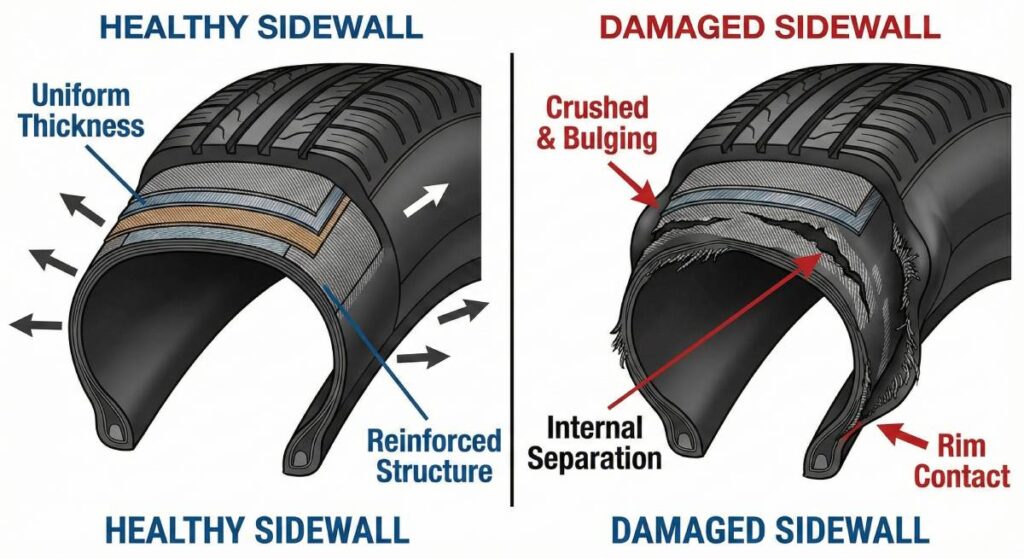
1. Internal Sidewall Collapse
The “sidewall” is the vertical part of the tyre. Without air, the weight of the car crushes the rubber between the metal wheel rim and the road. This creates extreme friction and heat, shredding the internal structure of the tyre and making it unrepairable.
2. Catastrophic Rim Damage
Once the rubber is chewed away, your metal rim makes direct contact with the pavement. This leads to:
- Bending or cracking of the wheel.
- Grinding down the metal edges.
- Unbalancing the entyre wheel assembly.
3. Damage to Suspension and Brake Lines
A flapping, shredded tyre acts like a whip inside your wheel well. It can easily snag and sever brake lines, damage ABS sensors, or ruin your shocks and struts.
Exceptions: Do You Have Run-Flat tyres?
Some modern vehicles (especially BMW and Mercedes-Benz models) come equipped with Run-Flat tyres (RFT). These tyres have reinforced sidewalls designed to support the vehicle even with zero air pressure.
| tyre Type | Can You Drive on it Flat? | Max Distance | Max Speed |
| Standard tyre | No (Emergency only) | < 0.1 Miles | 15 mph |
| Run-Flat tyre | Yes | 50 Miles | 50 mph |
| Temporary Spare | Yes (Must be inflated) | 50 Miles | 50 mph |
Note: Even with Run-Flats, once you drive on them while “flat,” the tyre usually must be replaced rather than repaired.
Distance vs. Danger: How Far Can You Move?
If you are on a busy highway, do not stop in the middle of a lane. It is better to “sacrifice” the tyre and rim to reach the shoulder than to risk a high-speed rear-end collision.
Follow the “Parking Lot” Rule: Only drive far enough to reach a flat, level, and safe area away from traffic. If that is more than a quarter-mile away, pull over immediately and call for a tow.
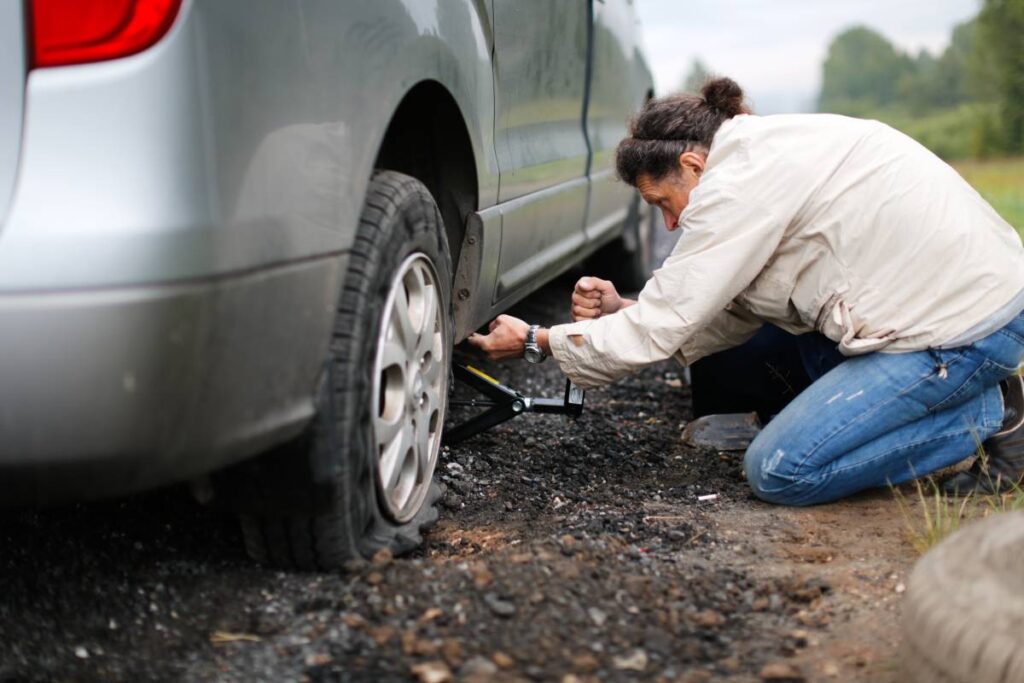
Immediate Steps: What to Do Right Now
- Grip the wheel firmly: A flat tyre will cause the car to pull hard to one side.
- Slow down gradually: Avoid slamming on the brakes, which can cause the rim to slip off the tyre completely.
- Turn on your hazard lights: Signal to other drivers that you are experiencing an emergency.
- Find level ground: Changing a tyre on an incline is extremely dangerous as the jack can slip.
- Check your TPMS: If your tyre Pressure Monitoring System light is on, do not ignore it, even if the tyre “looks” okay.
Remember, keeping your hazard lights on for an extended period while waiting for a tow can drain your power; this is where understanding your dual battery setup or vehicle’s energy capacity becomes a lifesaver.
Pro Tip: Keep a “Safety Kit” in your trunk containing a reflective vest, a pressure gauge, and a portable tyre inflator.
The Bottom Line
Driving on a flat tyre is a gamble where the stakes are your safety and your bank account. While you might save a few minutes by trying to “limp” home, the risk of a total blowout or steering failure is simply too high.
When in doubt, pull over, stay safe, and call for professional help.
Have you checked the air pressure in your spare tyre lately? It’s the one piece of maintenance most drivers forget until it’s too late.
Frequently Asked Questions
