

What Does Interior Decoration Include? The Complete Checklist
 twiceblessedbloggers
You walk into your living room and feel… nothing. Or worse, you feel stress. You know the space has potential good bones, decent light, but it lacks cohesion, personality, and comfort.
You want to fix it, but the industry jargon is overwhelming. Do you need an interior designer? A decorator? A stylist? If you hire someone for “decoration,” does that include picking new flooring, or just the throw pillows?
Misunderstanding the scope of interior decoration often leads to scope creep, blown budgets, or a room that still feels “unfinished” because the fundamental layers were missed.
Below, we break down exactly what interior decoration includes, distinguishing the aesthetic magic of decoration from the structural science of design, so you can transform your home with confidence.
The Golden Rule: Decoration vs. Design
Before diving into the specific items, we must clear up the most common misconception in the industry. While the terms are often used interchangeably, the scope is vastly different.
Think of it this way: Interior Design is the surgery; Interior Decoration is the makeup.
| Feature | Interior Design | Interior Decoration |
| Primary Focus | Functionality, Safety, & Structure | Aesthetics, Mood, & Style |
| Scope | Moving walls, electrical, plumbing | Furniture, paint, textiles, accessories |
| Required Skills | CAD, Building Codes, Architecture | Color Theory, Spatial Arrangement, Styling |
| Timeline | Months to Years | Weeks to Months |
Pro Tip: If you need to rip out cabinets or move a toilet, you need a designer (and likely a contractor). If you want to change the feel of the room without dust and demolition, you need a decorator.
The 5 Pillars of Interior Decoration
When you engage in interior decoration, you are managing five distinct layers of a room.
1. Furniture Layout & Sourcing
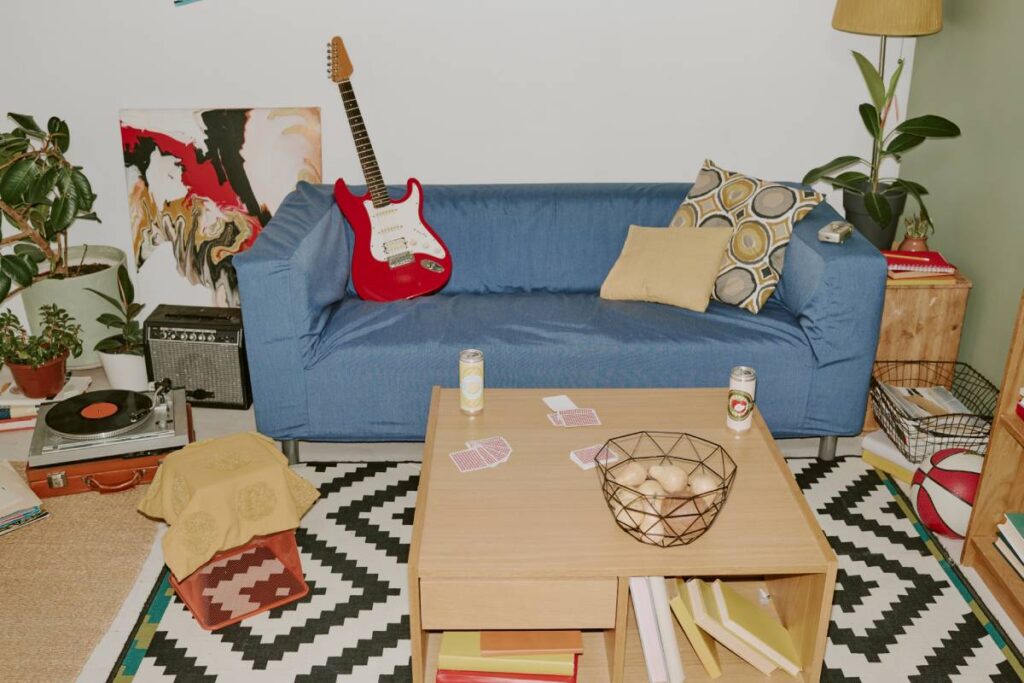
This is the foundation. Decoration isn’t just about buying a nice sofa; it is about Spatial Planning.
- Traffic Flow: Ensuring there is 30-36 inches of walking space between major pieces.
- Scale & Proportion: Selecting furniture that fits the room (e.g., avoiding a massive sectional in a petite studio).
- Sourcing: Finding unique pieces that aren’t available at big-box stores.
When assessing your room’s ‘bones,’ consider the condition of your base layers. While a rug can hide imperfections, knowing how long timber flooring lasts and when it needs replacing is crucial before you start layering expensive furniture on top of it.
2. Colour Schemes & Wall Treatments
Colour is the most powerful tool in a decorator’s arsenal because it dictates the psychology of the room.
- Paint Selection: Choosing the right undertones (warm vs. cool) based on natural light exposure.
- Wallcoverings: Selecting wallpaper, grasscloth, or decals to add texture.
- Architectural Detail: Adding non-structural trim, wainscoting, or crown moulding to elevate the room’s character.
3. Soft Furnishings (The Textiles)
“Soft goods” soften the hard edges of architecture and absorb sound, making a room feel livable. This category includes:
- Window Treatments: Curtains, roman shades, and blinds (crucial for light control).
- Area Rugs: Anchoring furniture groupings.
- Upholstery: Custom fabrics for headboards, chairs, and ottomans.
- Accent Textiles: Throw pillows and blankets that introduce pattern and pop.
4. Lighting Design (Ambient & Decorative)
Decorators rarely move junction boxes (that’s electrical work), but they heavily influence how a room is lit.
- Layering: Combining overhead light, task light (reading lamps), and accent light (sconces).
- Fixture Selection: Choosing statement chandeliers or pendants that act as “jewellery” for the room.
- Bulb Temperature: Ensuring the light quality (e.g., 2700K vs 3000K) matches the room’s function.
5. Accessories & Art Curation
This is the final 10% that makes 90% of the visual impact. It involves the “styling” phase.
- Art: Sourcing prints, canvas, or photography and determining the hanging height.
- Decor: Books, vases, trays, and sculptures.
- Biophilia: Incorporating plants to bring life and organic shapes into the space.
Expert Insight: The “Invisible” Deliverable
As the lead creatives at Alix Helps Interiors often explain to clients, the most valuable thing interior decoration includes isn’t a physical object; it is Cohesion.
Many homeowners buy beautiful individual items: a great rug, a nice lamp, a trendy chair. But when they put them together, it looks like a showroom explosion. A decorator’s true job is editing. We provide the discipline to say “no” to a beautiful item because it doesn’t serve the whole. We sell the relationship between objects, not the objects themselves.
What is Typically Excluded?
To manage expectations, it is vital to know what falls outside the scope of standard interior decoration:
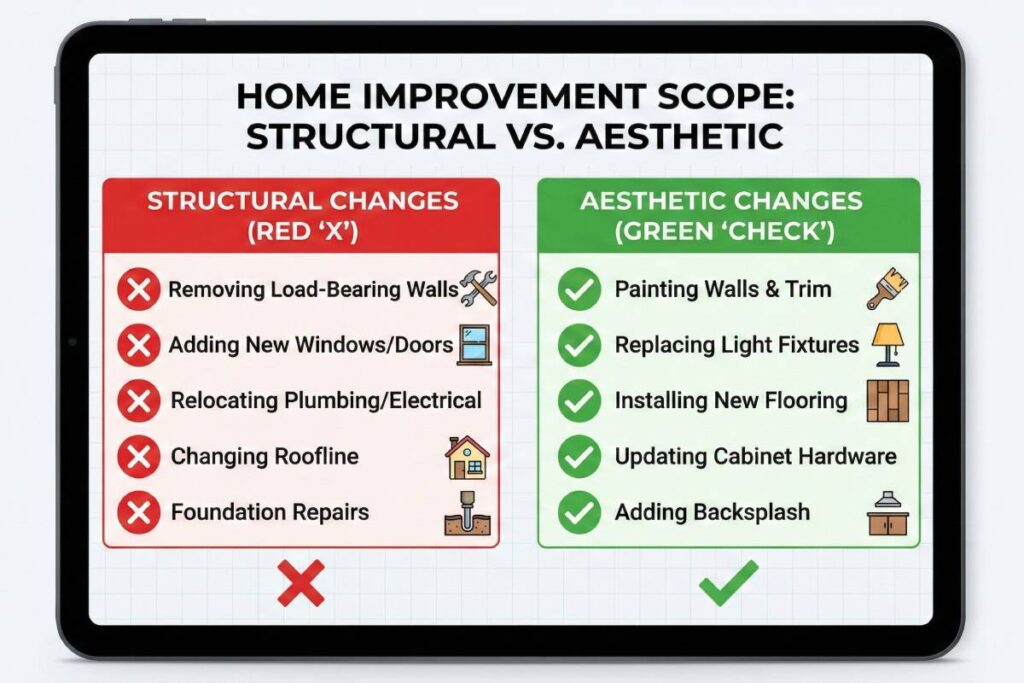
- Structural Alterations: Moving load-bearing walls or changing window sizes.
- MEP Plans: Mechanical, Electrical, and Plumbing schematics.
- Permitting: Pulling city permits for construction.
- Hard Material Specification: While some decorators help pick tile, specifying sub-flooring or architectural-grade materials is usually a designer’s role.
The Process: How Decoration Happens
If you hire a professional decorator, the “inclusion” list is delivered via a structured process:
- Consultation & Analysis: Assessing needs, budget, and measuring the space.
- Concept Development: Creating “Mood Boards” and 2D floor plans.
- Sourcing & Procurement: Handling the ordering, shipping, and tracking of goods.
- Installation Day: The “Big Reveal” where furniture is placed and styled.
Conclusion
So, what does interior decoration include? It includes everything required to turn a house into a home, except the construction tools. From the paint on the walls to the rug under your feet and the art that inspires you, decoration is the holistic approach to creating an environment that reflects your personality.
Ready to transform your space? Start by assessing your lighting and layout—the two biggest impact points—before you ever swipe your credit card for new furniture.
Frequently Asked Questions
